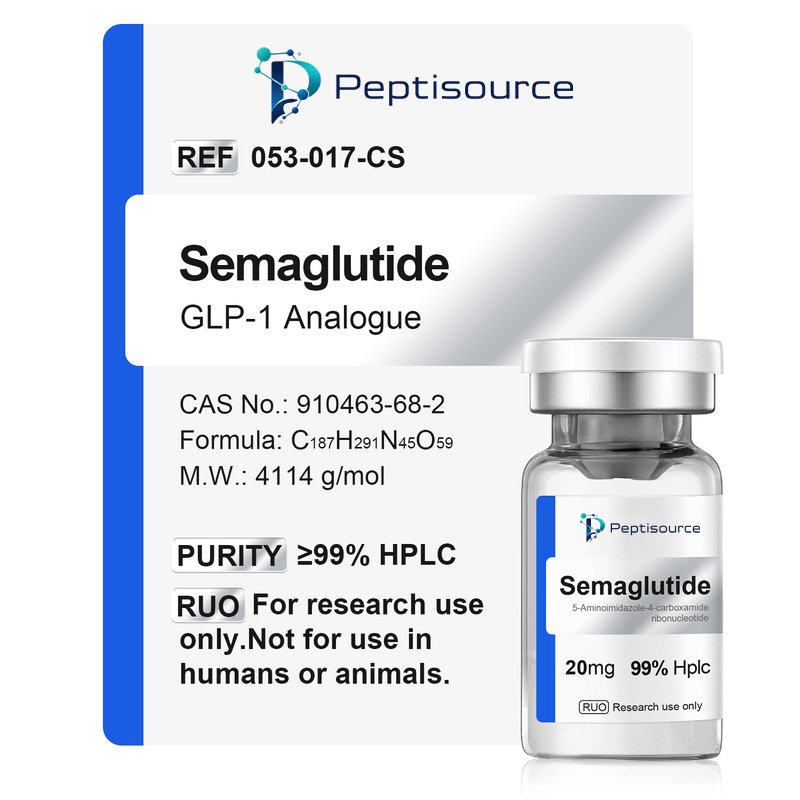
Semaglutid is a long-acting glucagon-like peptide-1 (GLP-1) receptor agonist that extends the half-life of natural GLP-1 through structural modification. It mimics the physiological effects of GLP-1, promoting insulin secretion in a glucose-dependent manner, inhibiting glucagon release, delaying gastric emptying, and enhancing satiety. It effectively controls blood glucose levels in patients with type 2 diabetes, significantly reduces body weight in obese or overweight individuals, and lowers the risk of cardiovascular events. It is a peptide with dual benefits of blood glucose control, weight loss, and potential cardiovascular protection.
▎Semaglutid Structure
Source: Pub Chem | Sequence: His-Aib-Glu-Gly-Thr-Phe-Thr-Ser-Asp-Val-Ser-Ser-Tyr-Leu-Glu-Gly-Gln-Ala-Ala-Lys (Aeea-Aeea-γ-glu-octadecanedioic)-Glu-Phe-Ile-Ala-Trp-Leu-Val-Arg-Gly-Arg-Gly-OH Molecular Formula: C187H291N45O59 Molecular Weight: 4114 g/mol CAS Number 910463-68-2 PubChem CID 56843331 Synonyms: Rybelsus; Ozempic ; Wegovy |
▎Semaglutid Research
What is the research background of Semaglutid?
The development of Semaglutid originated from the exploration of GLP-1's physiological effects. Scientists were inspired by exendin-4 in lizard saliva to develop the first-generation GLP-1 receptor agonist. To pursue a longer-acting treatment option, Semaglutid was developed through chemical modification of the GLP-1 peptide chain, with the addition of fatty acid chains to extend its half-life. As research progressed, its potential in weight loss and cardiovascular disease prevention and treatment also became evident.
What is the mechanism of action of Semaglutid?
Regulation of insulin and glucagon secretion:
As a GLP-1 receptor agonist (GLP-1 RA), Semaglutid stimulates pancreatic β-cells to secrete insulin while inhibiting α-cells from secreting glucagon. After eating, when blood glucose levels rise, semaglutide binds to GLP-1 receptors, activating downstream signaling pathways to prompt β cells to release insulin, enhancing the body's uptake and utilization of glucose, and lowering blood glucose levels. By inhibiting glucagon secretion and reducing hepatic glucose output, it further stabilizes blood glucose levels. Under normal physiological conditions, the body maintains stable blood glucose levels by regulating the balance between insulin and glucagon. Semaglutid mimics the effects of GLP-1, optimizing this regulatory process[1,2].


Figure 1 The diabetes- and obesity-related effects of GLP-1[3].
Inhibition of hepatic gluconeogenesis:
Semaglutid inhibits the hepatic gluconeogenesis process. Gluconeogenesis is the pathway by which the liver produces glucose during fasting or starvation states, maintaining blood glucose stability when blood glucose levels are low. However, in pathological conditions such as diabetes, gluconeogenesis may become overly active, leading to elevated blood glucose levels. Semaglutid acts on relevant signaling pathways to reduce the expression or activity of key gluconeogenesis enzymes, thereby decreasing hepatic glucose production and aiding in blood glucose control[1].
Effects on energy metabolism and appetite:
Semaglutid has regulatory effects on energy metabolism and appetite. It reduces energy intake, potentially by acting on the central nervous system to influence appetite regulation centers, inducing a sense of fullness and reducing food intake. Additionally, Semaglutid has minimal effects on energy expenditure, primarily achieving weight regulation through reduced energy intake, which aids in weight loss for obese patients. In trials, patients using Semaglutid often reported reduced appetite and subsequent weight loss [1,4].
Potential mechanisms of action on the cardiovascular system: Semaglutid may exert beneficial effects on the cardiovascular system through multiple mechanisms. On one hand, it can lower blood glucose and body weight, thereby mitigating the damage caused by metabolic disorders to the cardiovascular system. On the other hand, Semaglutid may directly act on cardiovascular tissues, such as by improving vascular endothelial function, reducing inflammatory responses and oxidative stress, stabilizing atherosclerotic plaques, and lowering the risk of cardiovascular diseases. Cigrovski's research shows that Semaglutid can improve the function of vascular endothelial cells in secreting nitric oxide, enhance vasodilation, and protect the cardiovascular system[5].
Direct effects on cardiac function:
Recent studies have found that acute exposure to Semaglutid can induce a dose-dependent strong positive inotropic effect on human atrial trabeculae without increasing the tendency for arrhythmias. This effect may stem from increased sarcoplasmic reticulum Ca2+ reuptake, improving atrial function, and holds positive implications for symptom relief in heart failure patients. In related experiments, atrial trabeculae exposed to Semaglutid exhibited significantly enhanced contractile force without an increase in arrhythmias [6].
What are the applications of Semaglutid?
For type 2 diabetes:
Semaglutid is used to treat type 2 diabetes. Whether administered orally or via subcutaneous injection, it effectively lowers hemoglobin A1c (HbA1c) levels[1].
For obesity treatment:
Semaglutid demonstrates significant efficacy in obesity treatment. Clinical trials indicate that obese patients treated with semaglutide experience significant weight loss, accompanied by reduced waist circumference, improved blood pressure parameters, lowered HbA1c levels, and improved lipid profiles (e.g., reduced total cholesterol, low-density lipoprotein cholesterol, and triglycerides, and increased high-density lipoprotein cholesterol). Its weight loss effects are superior to those of placebos and other weight loss medications, meeting the standards set by the EMA and FDA for weight loss medications, and providing a new treatment option for obese patients [1,2].
Reduced risk of cardiovascular disease:
For adults with type 2 diabetes and known heart disease, Semaglutid can reduce the risk of cardiovascular disease. Studies such as the SUSTAIN 6 and PIONEER 6 trials demonstrated the non-inferiority and safety of subcutaneous and oral Semaglutid in cardiovascular health, and the SELECT trial further confirmed its potential advantages in improving cardiovascular outcomes, helping to reduce the risk of cardiovascular events[1].
Renal protective effects:
In a mouse model of renal ischemia-reperfusion injury, Semaglutid demonstrated renal protective effects. It reduces levels of inflammatory molecules such as tumor necrosis factor-α (TNF-α) and its receptor, interleukin-6 (IL-6), decreases F8 prostaglandin production, increases PI3K and AKT levels in renal tissue, and alleviates renal injury, suggesting that Semaglutid may have therapeutic potential for acute kidney injury [7].
Conclusion
As a GLP-1 receptor agonist, Semaglutid effectively controls blood glucose levels in patients with type 2 diabetes by regulating insulin and glucagon secretion, inhibiting hepatic gluconeogenesis, and influencing energy metabolism and appetite, while significantly reducing body weight in obese individuals. It possesses cardiovascular protective effects, reducing the risk of cardiovascular disease, and protects the kidneys. It has therapeutic effects on acute kidney injury, diabetic nephropathy, and other kidney diseases.
About The Author
The above-mentioned materials are all researched, edited and compiled by Peptisource.
Scientific Journal Author
Hegner, P. is based at the University of Regensburg in Germany and has a wide range of research interests. These include the cardiovascular system and cardiology, where he explores the mechanisms and treatments of cardiovascular diseases; biochemistry and molecular biology, focusing on uncovering molecular biological and biochemical reaction mechanisms and regulatory processes; pharmacology and pharmacy, emphasizing drug development and efficacy evaluation; and the respiratory system as well as general and internal medicine, concentrating on the diagnosis and treatment of respiratory diseases and common internal medical conditions. He is a scholar with achievements in multiple fields of medicine. Hegner P is listed in the reference of citation [6].